1. 우리는 왜 계속 비교하게 될까
사람은 본능적으로 위치를 확인하려는 존재다.
지금 내가 잘 가고 있는지, 늦은 건 아닌지, 뒤처진 건 아닌지 확인하려면 기준이 필요하다. 문제는 그 기준이 나와 같은 궤도에 있지 않은 대상일 때다.
비교는 안심을 주기도 하지만, 대부분의 경우 불필요한 불안을 만든다. 특히 온라인 환경에서는 비교가 거의 자동으로 발생한다. 조회수, 수익, 속도, 결과가 한 화면에 나열되기 때문이다.
2. 은하마다 중력은 다르다
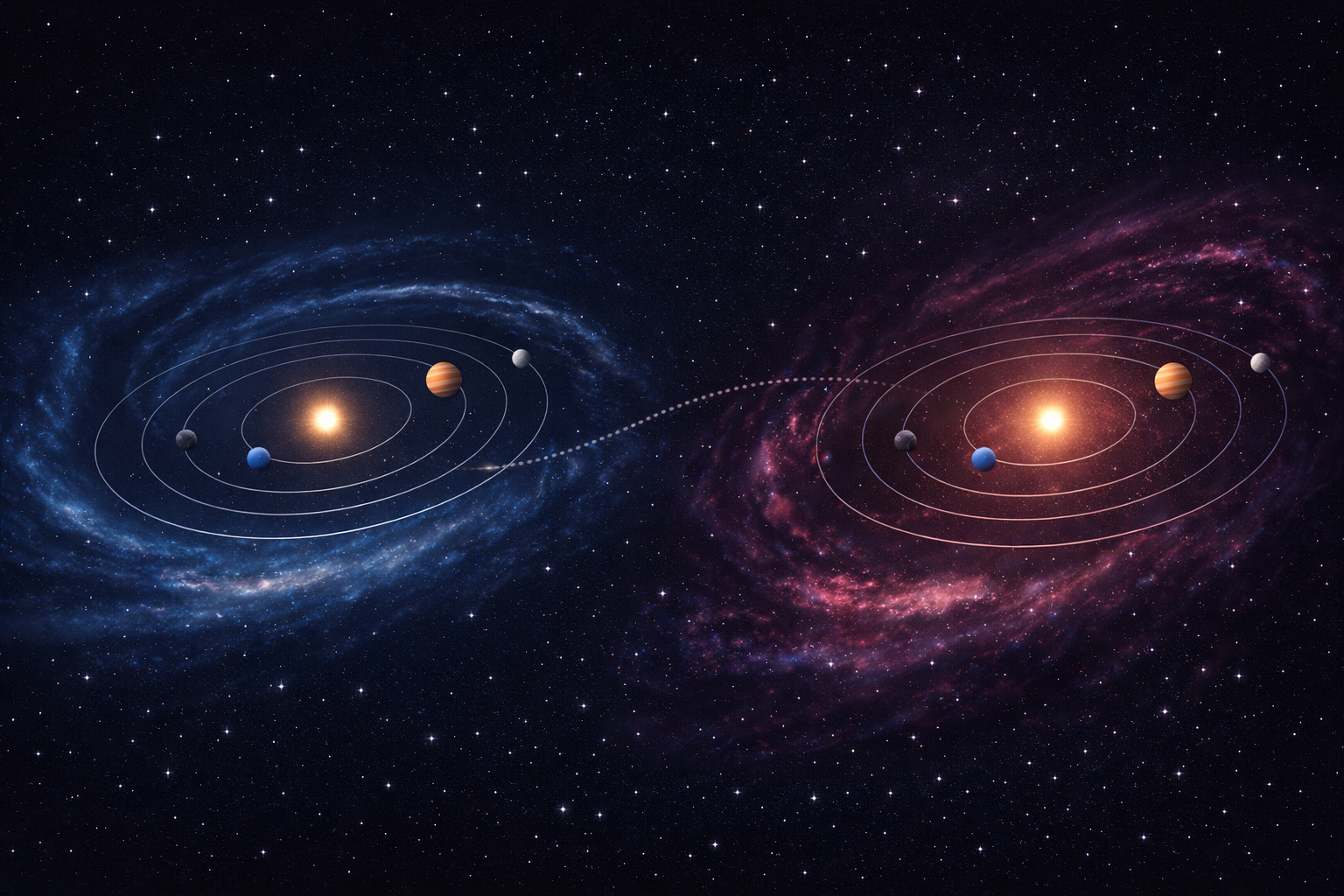
천문학적으로 은하는 각각 독립적인 중력계를 가진다.
어떤 은하는 별이 촘촘하고, 어떤 은하는 희미하다. 어떤 은하는 생성 단계이고, 어떤 은하는 이미 안정기에 들어섰다.
그런데 우리는 종종 다른 은하의 별 움직임을 보며, 내 행성이 왜 저렇게 돌지 않느냐고 자책한다.
이건 노력의 문제가 아니라 중력과 구조의 차이다.
3. 비교가 무너뜨리는 것은 속도가 아니라 방향이다
비교의 가장 큰 문제는 “느리다”는 감정이 아니다.
“잘못 가고 있다”는 착각이다.
원래 다른 궤도로 설계된 경로를 보며, 방향 자체를 의심하게 된다. 그 순간부터 글의 주제는 흔들리고, 작업의 리듬은 깨진다.
알고리즘이나 시스템은 이런 흔들림을 가장 먼저 감지한다. 감정이 아니라 패턴 붕괴로 인식되기 때문이다.
4. 같은 궤도는 속도가 아니라 반복으로 만들어진다
우주에서 궤도는 단번에 만들어지지 않는다.
같은 거리, 같은 방향, 같은 속도의 반복이 쌓여야 비로소 안정된다.
블로그든 일이든 마찬가지다. 남의 은하를 관측하는 시간보다, 내 궤도를 반복하는 시간이 훨씬 중요하다.
비교를 멈추는 순간, 결과가 아니라 구조가 보이기 시작한다.
5. 비교를 멈춘다는 것은 현실을 외면하는 게 아니다
비교를 안 한다는 건 정보를 안 본다는 뜻이 아니다.
다만 그것을 참고 자료로만 쓰겠다는 태도다.
“저 사람은 왜 빠를까?”가 아니라
“저 사람은 어떤 중력 안에 있을까?”로 질문이 바뀌는 순간, 감정 소모는 줄어들고 전략은 선명해진다.
6. 내 은하에는 내 시간표가 있다
모든 은하는 생성 속도가 다르다.
늦어 보이는 은하가 사실은 더 오래 빛나기도 한다.
지금 당장의 밝기보다 중요한 건, 계속 유지되는 궤도다. 비교는 그 사실을 잊게 만든다.
비교는 종종 동기처럼 보이지만, 실제로는 궤도 혼란에 가깝다.
다른 은하를 보지 말라는 말이 아니다.
다만, 그 은하를 내 궤도로 착각하지 말 것.
그것만으로도 많은 흔들림은 사라진다.
#비교의함정 #천문학메타포 #다른은하 #나만의궤도
#구조의차이 #중력의은유 #방향성상실 #패턴붕괴
#시스템사고 #자기궤도유지
🪐 Comparison Is Mistaking Another Galaxy for Your Own Orbit
1. Why We Keep Comparing Ourselves
Humans are wired to check their position.
Am I moving fast enough? Am I falling behind? Am I on the right path?
To answer these questions, we look for reference points. The problem begins when those references exist in entirely different orbits.
In digital spaces, comparison happens automatically.
Views, revenue, speed, and outcomes appear side by side on the same screen.
What looks like objective information quietly turns into emotional pressure.
2. Every Galaxy Has Its Own Gravity
In astronomy, each galaxy operates under its own gravitational system.
Some are dense with stars. Others are faint and expanding.
Some are still forming, while others have already stabilized.
Yet we often look at another galaxy’s movement and ask why our planet does not behave the same way.
This is not a failure of effort.
It is a difference in structure and gravity.
3. Comparison Destroys Direction, Not Speed
The real damage of comparison is not feeling slow.
It is believing you are going the wrong way.
When you judge your path using someone else’s orbit, you begin to question your direction itself.
Topics shift. Rhythm breaks. Consistency disappears.
Systems and algorithms detect this immediately — not as emotion, but as pattern collapse.
4. Orbits Are Built by Repetition, Not Talent
In space, an orbit is not formed instantly.
It emerges from repeating the same distance, direction, and motion over time.
Work is no different.
Blogs, projects, and skills stabilize through repetition, not brilliance.
Time spent observing other galaxies weakens your gravity.
Time spent repeating your own path strengthens it.
5. Stopping Comparison Is Not Ignoring Reality
Not comparing does not mean avoiding information.
It means using it as reference, not judgment.
The question shifts from
“Why are they faster?”
to
“What kind of gravity are they operating under?”
When this shift happens, emotional exhaustion decreases and strategy becomes clearer.
6. Your Galaxy Has Its Own Timeline
Every galaxy forms at a different speed.
Some shine later but last longer.
What matters is not temporary brightness, but a sustainable orbit.
Comparison makes you forget that.
Comparison often disguises itself as motivation.
In reality, it causes orbital confusion.
You do not need to stop observing other galaxies.
You only need to stop mistaking them for your own.
#ComparisonTrap
#AstronomyMetaphor
#DifferentGalaxies
#OwnOrbit
#StructuralDifference
#GravitationalSystem
#DirectionalMisalignment
#PatternCollapse
#SystemsThinking
#StayInYourOrbit
✨ Sound Bite Corner
오늘 글의 핵심 단어, 소리로 익혀볼까요?
(난이도 ↑ / 추상·학술 어휘 3개)
🎧 핵심 단어 ① misalignment
의미
정렬 불일치, 방향 어긋남
→ 비교로 인해 방향 자체가 틀어지는 상태
발음
/ˌmɪsəˈlaɪnmənt/
소리 포인트
• mis /mɪs/ : 짧게 미스
• a /ə/ : 힘 빼고 어
• line /laɪn/ : 길게 라인 (강세)
• ment /mənt/ : 약하게 먼트
👉 미스-어-라인-먼트 (강세는 라인)
훈련 문장
Comparison causes misalignment of direction.
(컴패리선 코즈 미스얼라인먼트 어브 디렉션)
🎧 핵심 단어 ② gravitational
의미
중력의, 중력에 의한
→ 개인이 속한 구조적 힘의 성질
발음
/ˌɡrævɪˈteɪʃənl/
소리 포인트
• gra /ɡræ/ : 그래
• vi /vɪ/ : 윗니로 아랫입술 비
• ta /teɪ/ : 길게 테이 (강세)
• tional /ʃənl/ : 션얼 (붙여서)
👉 그래-비-테이-션얼
훈련 문장
Every system has its own gravitational force.
(에브리 시스템 해즈 잇츠 오운 그래비테이셔널 포스)
🎧 핵심 단어 ③ disorientation
의미
방향 상실, 혼란
→ 타인의 궤도를 기준으로 삼을 때 생기는 상태
발음
/dɪsˌɔːrɪenˈteɪʃən/
소리 포인트
• dis /dɪs/ : 디스
• or /ɔːr/ : 오어
• ien /ɪen/ : 이언
• ta /teɪ/ : 길게 테이 (강세)
• tion /ʃən/ : 션
👉 디스-오어-이언-테이-션
훈련 문장
Constant comparison leads to disorientation.
(콘스턴트 컴패리선 리즈 투 디소어리엔테이션)
🔁 리듬 연결 연습 (고급)
Comparison creates misalignment and disorientation within different gravitational systems.
컴패리선 크리에이츠 미스얼라인먼트 앤 디소어리엔테이션 위딘 디퍼런트 그래비테이셔널 시스템즈
🎯 소리 핵심 정리
어려운 단어일수록 강세 위치가 핵심이다.
강세가 잡히면, 의미도 함께 정렬된다.